
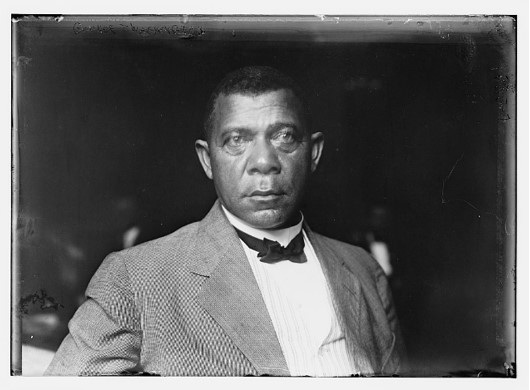

Born into slavery on April 5, 1856, in Hale’s Ford, Virginia, Washington was freed when US, troops reached the area during the Civil War. As a young man, Booker T. Washington worked his way through Hampton Normal and Agricultural Institute and attended college at Wayland Seminary. In 1881, he was named as the first leader of the new Tuskegee Institute in Alabama, an institute for black higher education. He expanded the college, enlisting students in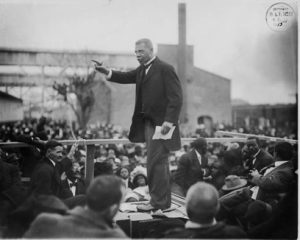 construction of buildings. Work at the college was considered fundamental to students’ larger education. He attained national prominence for his Atlanta Address of 1895, which attracted the attention of politicians and the public. Washington played a dominant role in black politics, winning wide support in the black community of the South and among more liberal whites. Washington wrote an autobiography, Up from Slavery, in 1901, which became a major text. In that year, he dined with Theodore Roosevelt at the White House, which was the first time a black person publicly met the president on equal terms. After an illness, he died in Tuskegee, Alabama on November 14, 1915.
Booker T. Washington and Julius Rosenwald forged a transformative partnership that led to the creation of the Rosenwald Schools, a landmark initiative in American education history. Between 1912 and 1932, their collaboration built nearly 5,000 schools, teacher homes, and shops across 15 Southern and border states, primarily to serve African American children in the segregated South. These schools were not gifts but the result of a matching grant system: local Black communities raised funds, donated land and labor, and secured contributions from white officials, while Rosenwald’s fund provided the remaining financial support.
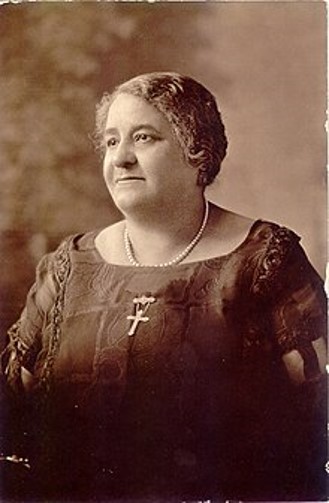
Maggie Lena Walker (July 15, 1864 – December 15, 1934) was an American businessperson and teacher. In 1903, Walker became both the first African-American woman to charter a bank and the first African-American woman to serve as a bank president. As a leader, Walker achieved successes with the vision to make tangible improvements in the way of life for African Americans. Disabled by paralysis and a wheelchair user later in life, Walker also paved the way for people with disabilities.
Along with her leadership of the Independent Order of St. Luke, Maggie Walker was also involved with the NAACP, The National Association of Colored Women, the National Urban League and National Negro Business League, and the United Order of Tents.
In 1903, Walker chartered the St. Luke Penny Savings Bank. She wanted to help finance black home ownership and turn saved cents into dollars for black people. Walker served as the bank’s first president, which earned her the recognition of being the first African-American woman to charter a bank in the United States. Charles Thaddeus Russell was Richmond’s first black architect and he designed the building for Walker. The St. Luke Penny Savings Bank’s leadership also included several female board members.
Walker provided children’s savings initiatives through the bank, giving children in Richmond’s Jackson Ward cardboard boxes for saving pennies. She let them open bank accounts when they had saved a dollar, and claimed that many had saved $100–400 during this time.
By 1920, Walker claimed that the bank had helped 645 black families completely pay off their homes. Walker was bank president through two mergers, retiring to chairman of the board of directors due to poor health in 1932. Eventually, the bank was renamed to The Consolidated Bank and Trust Company, which grew to serve generations of Richmonders as an African-American owned institution.
Walker volunteered for a number of organizations related to education and racial equality. She established and maintained a Community House in Richmond, helped recruit and keep a visiting nurse, and advised the Piedmont Sanitorium for black people with tuberculosis in Burkeville, Virginia. She handled the funds for the National League of Republican Colored Women and participated in women’s suffrage and voter registration campaigns, and helped form the Virginia Lily-Black Republican Party. She ran unsuccessfully for Virginia’s superintendent of public instruction at one point.
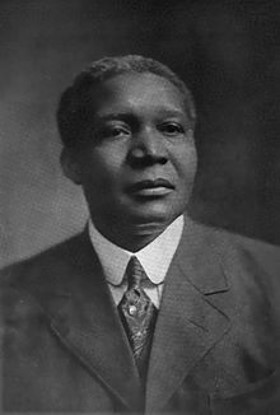
(August 26, 1867 – May 31, 1940) was an American educator and author. He served as an administrator at Hampton Institute. In 1915 he was named principal of Tuskegee Institute, after the death of founder Booker T. Washington, a position he held for 20 years until retirement in 1935. He authored several books including an autobiography. He held various administrative positions with the U.S. government.
In 1891, Moton was appointed commandant of the male student cadet corps at Hampton Institute, equivalent to Dean of Men, serving in this position for more than a decade. He was informally known as the “Major”.
In 1915, after the death of Booker T. Washington, Moton succeeded Washington as the second principal of the Tuskegee Institute. While supporting the work-study program, he emphasized education, integrating liberal arts into the curriculum, establishing Bachelor of Science degrees in agriculture and education. He improved courses of study, especially in teacher training, elevated the quality of the faculty and administration, constructed new facilities, and significantly increased the endowment by maintaining his connections to wealthy white benefactors in the North.
Robert Russa Moton High School in Farmville, Virginia, played a pivotal role in the landmark Brown v. Board of Education case. In April 1951, 16-year-old Barbara Johns led a student strike at Moton High School to protest the school’s overcrowded, dilapidated conditions, including classrooms in tar paper shacks, lack of basic facilities like a gym or science labs, and severe underfunding. The school was built to serve 180 students but housed over 450, with students often missing school due to illness from poor conditions.
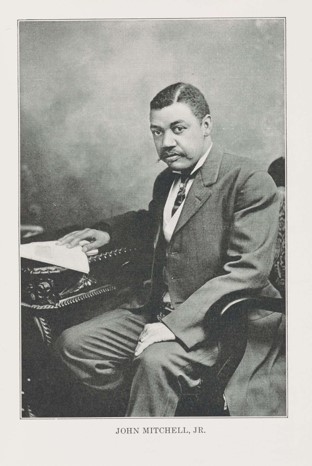
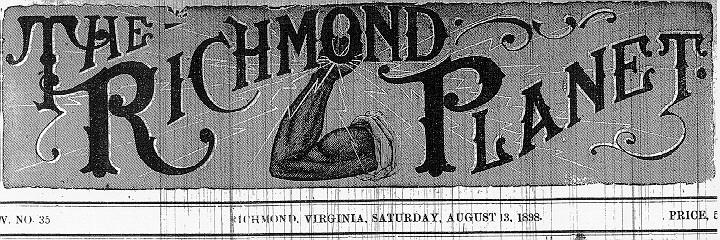
(July 11, 1863 – December 3, 1929) was an American businessman, newspaper editor, African American civil rights activist, and politician in Richmond, Virginia, particularly in Richmond’s Jackson Ward, which became known as the “Black Wall Street of America.” As editor of the Richmond Planet, he frequently published articles in favor of racial equality. In 1904, he organized a black boycott of the city’s segregated trolley system.
He founded and served as president of Mechanics Savings Bank. An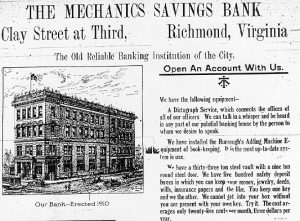 impressive building was constructed for the Bank on Clay Street and newspaper ads featured Mitchell Jr. He also served as a city alderman for two terms, and was active in fraternal and professional organizations. He ran unsuccessfully as a Republican Party candidate for governor in 1921.
In 1883 and 1884, he served as Richmond correspondent of the New York Freeman. On December 5, 1884, at the age of 21, Mitchell joined the Richmond Planet, a newly founded black newspaper and was made an editor. “It was under his tenure that the Planet gained its well-deserved reputation as a proponent of racial equality and of rights for the African-American community.” He was also a teacher in the local schools.
Mitchell reported fearlessly and campaigned against racist lynching, which increased in the late nineteenth century as whites worked to re-establish white supremacy and Jim Crow after the end of the Reconstruction era. Like Ida B. Wells, he reported lynchings. Mitchell’s condemnation of the lynching of Richard Walker in Charlotte County, Virginia resulted in his receiving death threats:
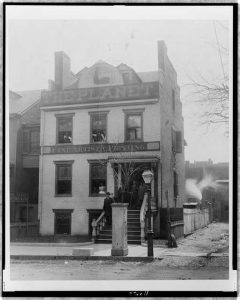 Mitchell himself was threatened with hanging at the hands of a Charlotte County mob angered by his reporting of the lynching, there, of Richard Walker in May 1886. Mitchell was sent a rope with a note attached warning him that he would be lynched himself if he ever set foot in the county. In reply, and borrowing a line from Shakespeare, Mitchell had this to say: ‘There are no terrors, Cassius, in your threats, for I am so strong in honesty that they pass by me like the idle wind, which I respect not.’ Then, armed with two Smith & Wesson pistols, he boarded a train for Smithville and undeterred, walked the five miles from the station to the site of the hanging.
In 1904, Richmond passed a new law to enforce segregated seating areas on its trolleys. In protest, Mitchell helped organize mass meetings and a boycott by blacks of the system. As Mitchell gleefully covered in his article: “Street Car Trap”, on the first day of the new system, only whites were arrested for refusing to change their seats; some could not be bothered to observe the new rules or had not realized the change was happening. The electric trolley system had been created in 1888. Suffering the loss of black business, but refusing to give up its Jim Crow policy, the trolley company went into receivership.
